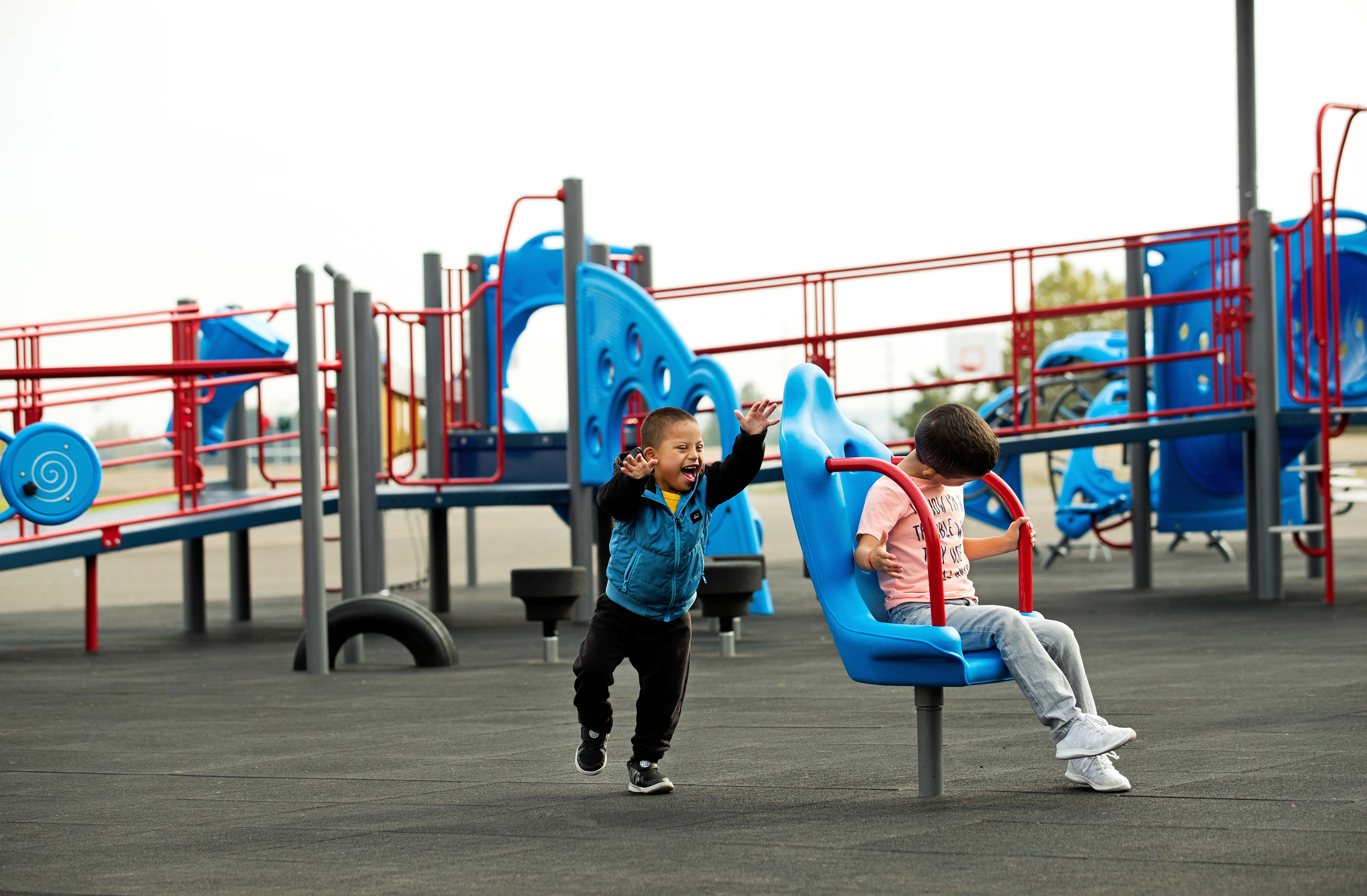
Creating an inclusive playground takes more than providing access to play equipment. A thoughtfully planned environment gives children of all abilities opportunities to explore, participate with their peers, and choose play experiences that meet their individual needs and interests.
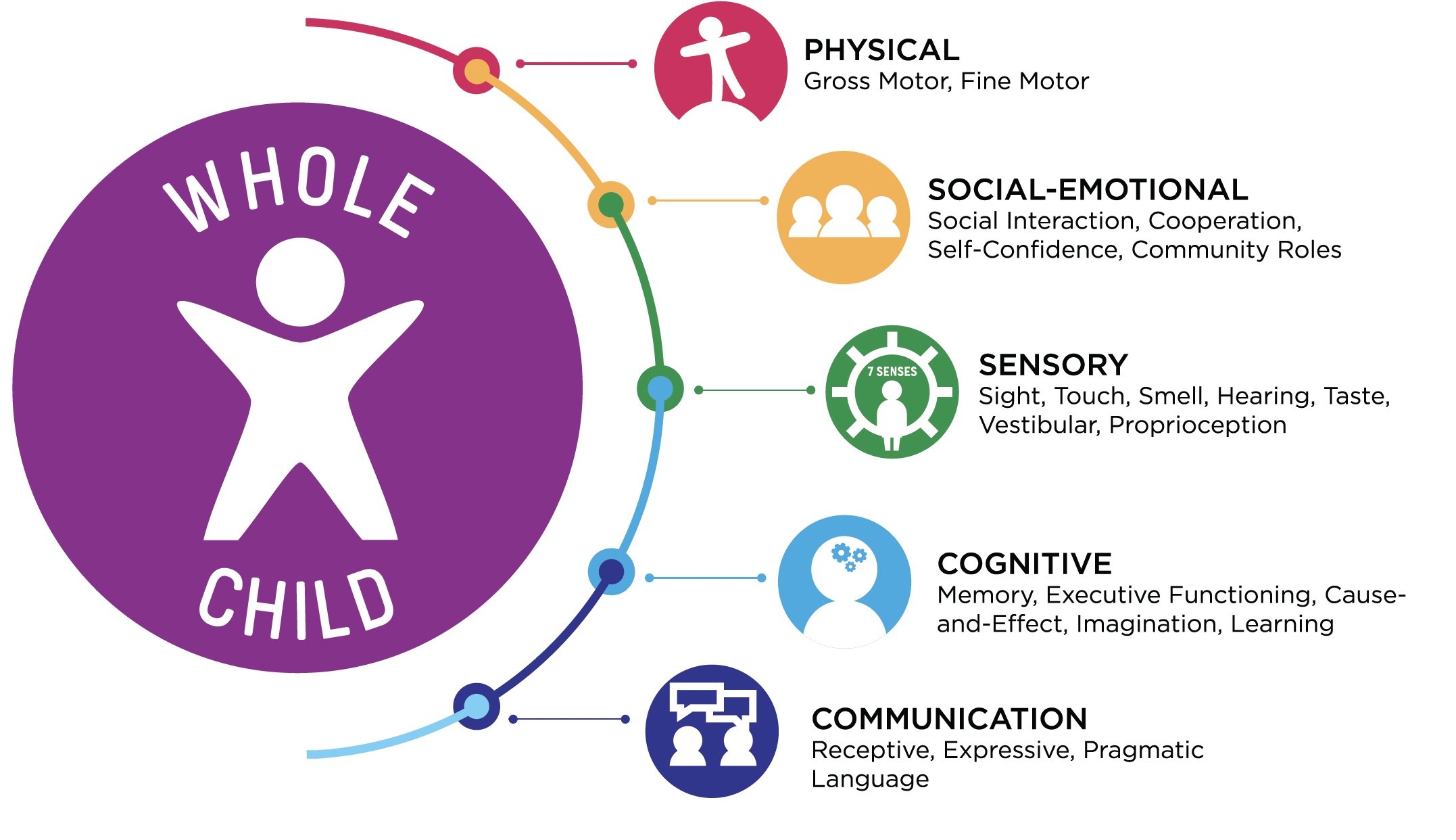
Effective inclusive playground design considers the whole child and the whole environment. Playgrounds should support physical, social-emotional, sensory, cognitive, and communication development while creating spaces that are more usable by more people, to the greatest extent possible.
Start with more than access
Access creates an important foundation for inclusion but alone does not guarantee participation.
Access refers to the routes and surfacing that people with disabilities use to get to the spaces and activities within the environment. Inclusive playground design goes further by considering what happens once people arrive. Can children participate in meaningful play? Can they interact with their peers? Can they make choices and explore as independently as possible?
Thoughtful design removes physical and social barriers, so children of all abilities can actively participate throughout the play environment.
Access does not guarantee inclusion. It is an important first step that provides the foundation for inclusion to occur.
Create a balance of active and passive play
Children need different play experiences throughout their visit.
Active spaces can encourage movement through climbing, swinging, sliding, spinning, rocking, crawling, and balancing. Providing graduated levels of challenge allows children to build skills and choose activities that align with their abilities and interests.
Inclusive play areas should also provide quieter, more passive settings. Organizing active and passive areas helps children understand the environment, supports appropriate play patterns, and reduces potential user conflicts.
The goal is not to separate children based on ability. Instead, organize the playground so different experiences work together as part of one connected environment.
Include cozy spaces for sensory and social relief
Some children need opportunities to step away from activity without leaving the playground experience.
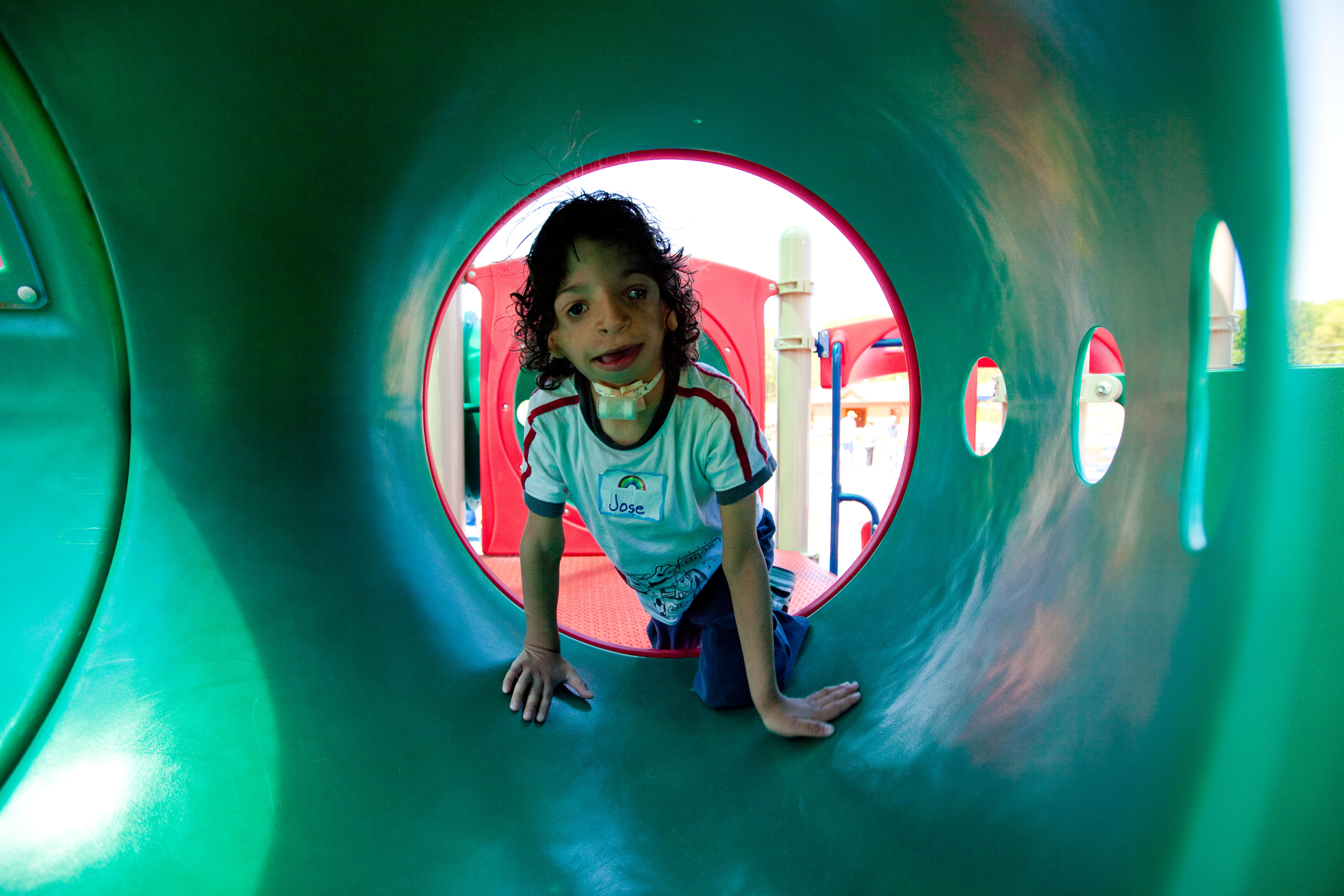
Cozy play spaces can provide sensory and social relief and give children opportunities to regroup, relax, pace their interactions, or play alone when desired. Locate these quiet, semi-enclosed areas close to the active play environment, so children remain connected to play and can engage again when ready.
Seats under decks, crawl tubes, tunnels, and sensory nooks can provide these calming spaces throughout the environment.
Plan sensory experiences with purpose
Inclusive playground design should offer opportunities to explore through sight, touch, smell, hearing, taste, vestibular input, and proprioception. Incorporating color, light, sound, texture, movement, and natural elements can create a rich multisensory environment.
But more sensory input is not always better.
Organize sensory experiences carefully to avoid creating a chaotic environment. Consistent patterns of color, tone, texture, and sound can help define activity areas, while opportunities for sensory regulation near active spaces give children choices based on their individual needs.
Design the playground layout to encourage social play
A playground’s layout can create opportunities for children to play with and alongside one another.
Consider circular or looping patterns that connect complementary activities and encourage continued participation. Cooperative activities designed for multiple users can encourage children to interact, work together, and share play experiences.
Also consider jump-in points adjacent to social and dramatic play activities. These observation areas give children a comfortable place to watch, process how an activity works, and build confidence before joining their peers.
Side-by-side and parallel play opportunities provide another important option. Children can play in proximity to others and engage at a level that works for them, supporting communication and social interaction.
Connect the whole environment
Inclusive design does not stop at the edge of the play equipment.
Accessible routes should connect parking, entrances, playground activities, amenities, and other recreation spaces. Within the playground, accessible surfacing and connected routes help children and families move throughout the environment. Wider routes, ramps, decks, and gathering areas can also provide greater comfort for people using mobility devices, caregivers, and multiple users moving through the space together.
Clear physical and visual cues can make the playground easier to navigate and understand. Paths, surface materials, textures, colors, graphics, and landscaping can help define activity areas, circulation routes, and spaces where visitors should use greater caution.
Consider comfort throughout the visit
A successful playground layout considers more than play activities. The whole environment matters.
Provide accessible seating and observation spaces where caregivers can comfortably supervise. Consider sight lines and shade. Provide adequate space adjacent to benches for wheelchairs and strollers without blocking circulation routes.
A balance of sun and shade can also make the environment more comfortable for people with different needs and sensitivities. Accessible restrooms, drinking fountains, picnic tables, shelters, and other amenities help create a more welcoming and usable destination for the whole community.
Ask these questions as you plan
As your team develops a playground layout, consider:
- Access: Do accessible routes connect people to and throughout the play environment?
- Variety: Does the playground offer physical, social, sensory, dramatic, and cooperative play experiences?
- Choice: Can children choose from active and passive experiences?
- Relief: Are cozy spaces available for sensory and social relief?
- Sensory experience: Are sensory experiences thoughtfully organized throughout the environment?
- Participation: Can children observe an activity before choosing to participate?
- Challenge: Do play activities provide different levels of challenge?
- Social play: Are there opportunities for cooperative and side-by-side play?
- Movement: Can people using mobility devices move, gather, and participate comfortably?
- Comfort: Do seating, shade, pathways, and other amenities support a comfortable experience for the whole community?
These questions move the conversation beyond whether someone can simply access a playground and toward whether people of varied abilities can meaningfully participate once they arrive.
Turn research into practice
The 7 Principles of Inclusive Playground Design®, developed in partnership with PlayCore and Utah State University’s Institute for Disability Research, Policy & Practice, provide evidence-based design best practices specifically tailored to outdoor play environments. The principles focus on creating environments where people can Be Fair, Be Included, Be Smart, Be Independent, Be Safe, Be Active, and Be Comfortable.
Together, the principles help communities move beyond minimum accessibility and create outdoor environments that support the developmental needs of the whole child while removing physical and social barriers to participation.
Ready to dive deeper?
Download a digital copy of the 7 Principles of Inclusive Playground Design® to explore the complete evidence-based design best practices, supporting research, and practical considerations for creating inclusive play environments.