Planning playground systems across multiple elementary schools is about more than selecting equipment. School districts must balance safety requirements, budget considerations, accessibility goals, maintenance, and the unique characteristics of each campus.
A thoughtful planning process helps create consistent, high-quality play environments that support physical activity, social development, and inclusive participation for all students. Whether your district is replacing aging playgrounds or developing a long-term improvement plan, following a structured approach can help ensure every school benefits from a safe and engaging play experience.
Quick Guide: 5 Steps for District Playground Planning
- Assess Each School's Needs: Survey sites for space, drainage, accessibility, student population, and existing equipment conditions.
- Follow Safety Guidelines: Follow CPSC recommendations and applicable ASTM standards.
- Build a Unified Budget: Consider district-wide purchasing opportunities and phased implementation plans.
- Design for Inclusion: Create spaces where children of all abilities can participate, play, and connect.
- Partner with One Provider: Streamline planning, sourcing, installation, and support across multiple campuses.
A consistent framework helps districts develop playground systems that deliver equitable play opportunities while simplifying management and decision-making.
Step 1: Assess Each School's Needs
No two school sites are exactly alike. Before evaluating equipment options, conduct a comprehensive assessment of each campus. Document available space, drainage conditions, accessibility features, student population, use zones, and the condition of existing playground assets. Site considerations such as equipment spacing, surfacing, accessibility, and environmental conditions can affect both safety and long-term performance (CPSC, 2024; applicable ASTM standards).
These assessments help identify site-specific challenges and opportunities. For example, one school may require improved drainage before installation, while another may need additional capacity to serve a growing student population. Gathering this information early creates a stronger foundation for planning and budgeting.
Step 2: Follow Safety Guidelines
Consistent adherence to established safety guidelines helps ensure every playground provides a safe environment for students while supporting district-wide quality standards.
Districts should follow recommendations in the U.S. Consumer Product Safety Commission's Public Playground Safety Handbook and applicable ASTM standards for playground equipment, surfacing, accessibility, installation, inspection, and maintenance. Together, these resources provide guidance for creating playground environments that support safe, age-appropriate play (CPSC, 2024; applicable ASTM standards).
Following recognized guidelines throughout planning and installation can help reduce risk while creating environments that encourage confident, active play.
Step 3: Build a Unified Budget
Managing playground improvements school by school can create inefficiencies and inconsistent outcomes. A district-wide budgeting approach allows administrators to evaluate needs collectively and prioritize investments strategically.
Combining projects across multiple campuses may provide greater purchasing power, more predictable implementation schedules, and a clearer long-term replacement strategy. Districts can also use phased planning to spread investments over several budget cycles while maintaining progress toward system-wide goals.
A unified budget helps ensure resources are allocated fairly and aligned with district priorities.
Step 4: Design for Inclusion
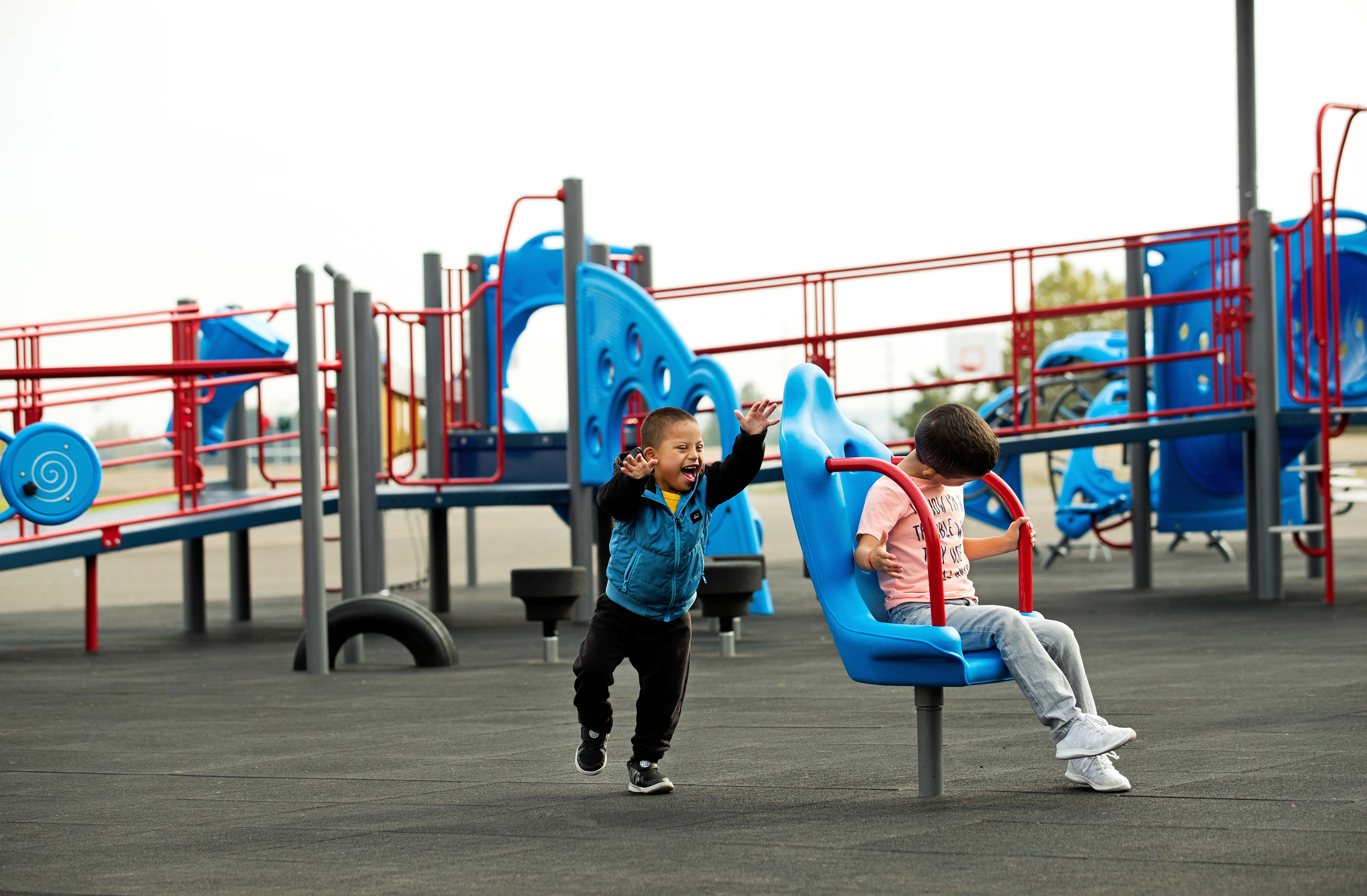
Inclusive playgrounds benefit all children by creating opportunities for meaningful participation, social interaction, and physical activity. Planning for accessibility should be considered early in the design process, particularly when evaluating routes, surfacing, transfer systems, and access to play experiences throughout the space (CPSC, 2024).
When planning playground systems, districts should consider accessible routes, diverse play experiences, varied sensory opportunities, and equipment that supports children with different abilities and developmental needs. Inclusive design encourages students to play together, build relationships, and engage in shared experiences.
By prioritizing inclusion during the planning process, districts can create welcoming spaces that reflect the needs of their entire school community.
Step 5: Partner with One Provider
Coordinating multiple playground projects often involves managing manufacturers, installers, timelines, and support resources. Working with a single trusted partner can simplify these responsibilities and improve consistency across campuses.
A district-wide partner can help streamline planning, design, equipment selection, procurement, installation, and ongoing support. This approach reduces administrative complexity while helping ensure playground systems align with district standards and long-term objectives.
PlayCore supports school districts with research-based playground solutions, expert planning guidance, and coordinated implementation across multiple sites, helping communities create engaging play environments that serve students for years to come.
Moving Forward with Confidence
District playground planning requires balancing immediate needs with long-term goals. By assessing each site, following established safety guidelines, building a unified budget, designing for inclusion, and partnering with an experienced provider, districts can develop playground systems that deliver consistent, high-quality play experiences across every campus.
A strategic approach today helps ensure students throughout the district have access to safe, engaging, and inclusive places to learn, play, and grow.
References
- U.S. Consumer Product Safety Commission. Public Playground Safety Handbook.
- ASTM International. Applicable standards for playground equipment, surfacing, accessibility, installation, inspection, and maintenance.