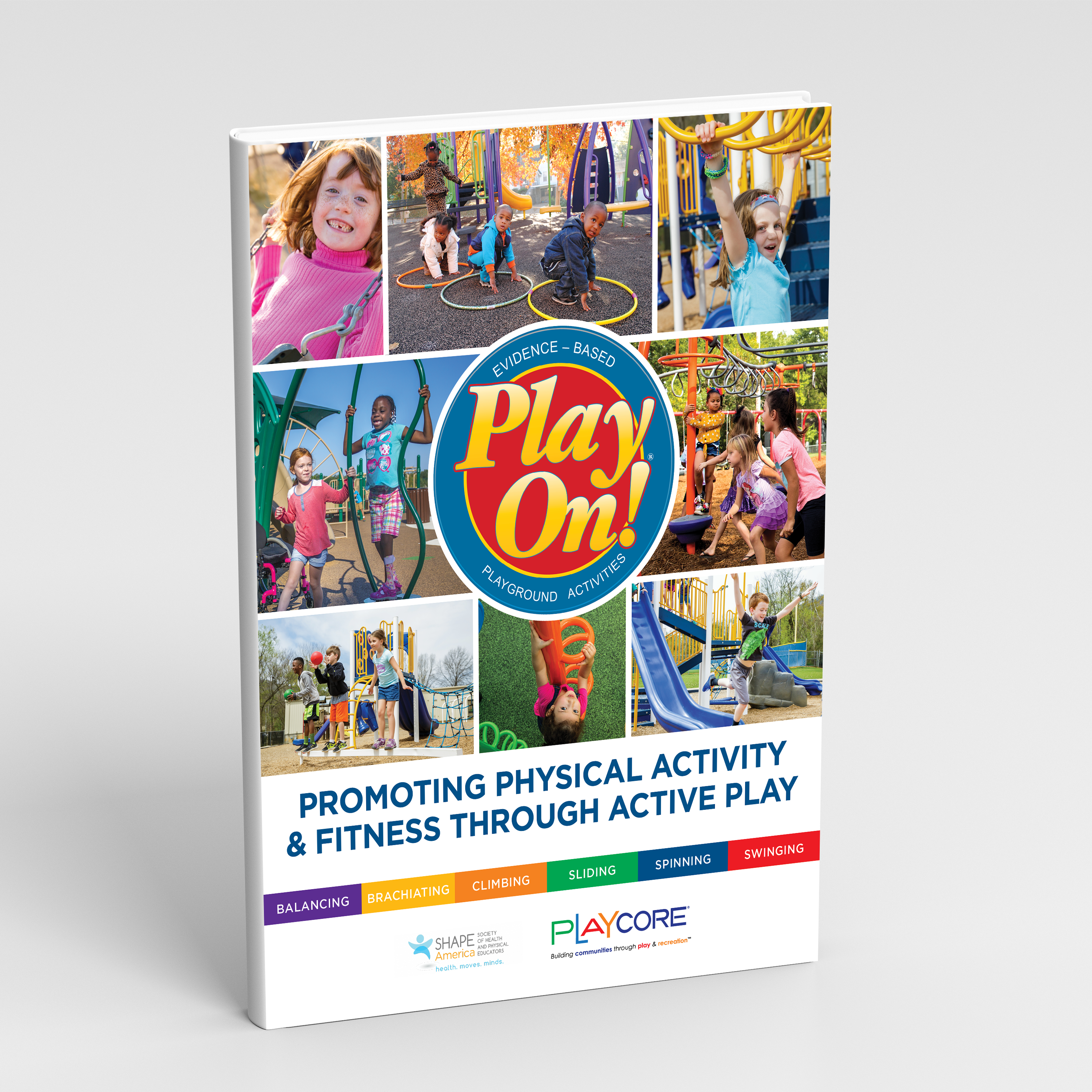
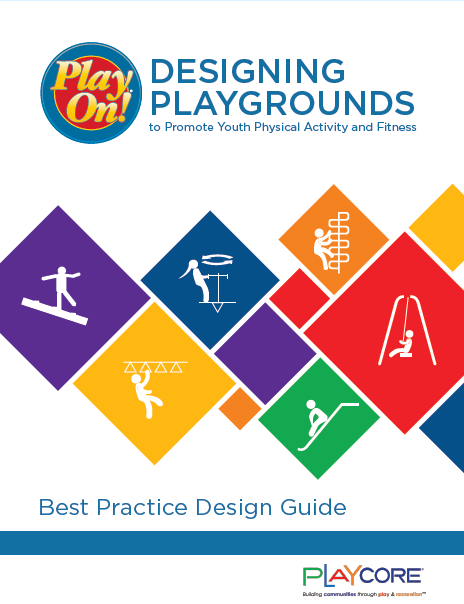
Play On!® Playground Design Guide
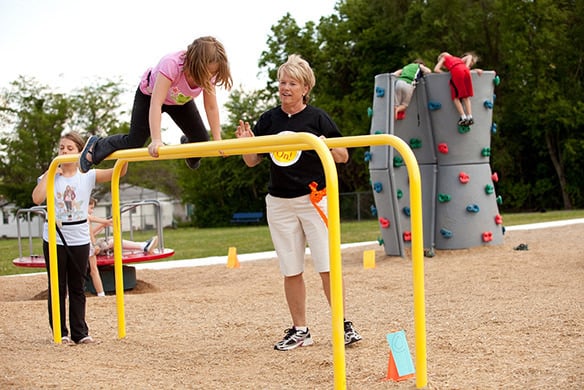
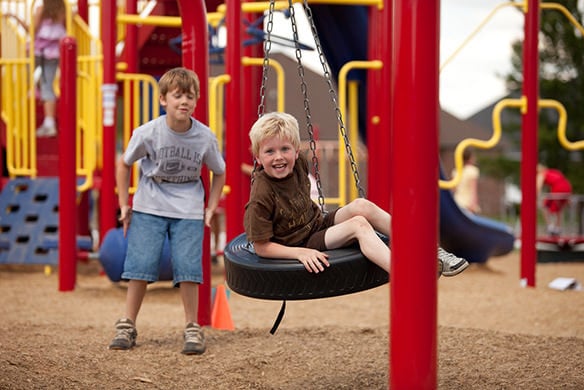
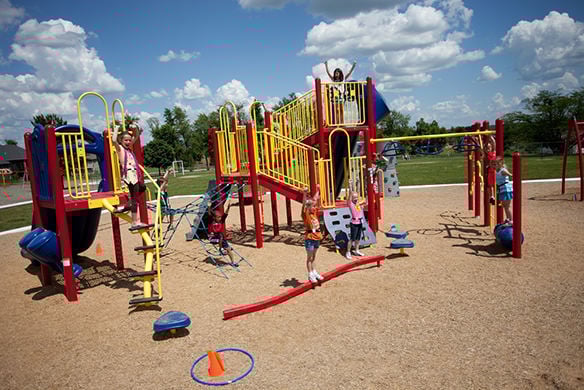
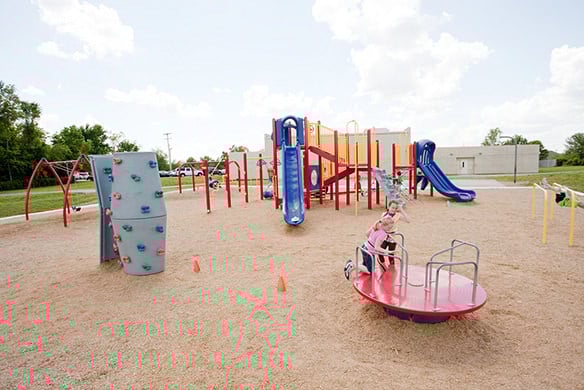
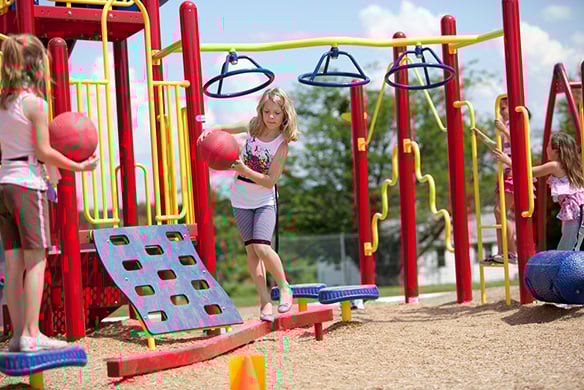
High-quality playground design is a powerful tool for communities to support children’s health and development. This guide provides evidence-based recommendations centered around the six elements of active play—balancing, brachiating, climbing, sliding, spinning, and swinging—to ensure playgrounds are thoughtfully equipped to foster diverse engagement and developmental progression.
Developed in partnership with SHAPE America, the guide provides comprehensive information on the relationship between play and fitness, including age-appropriate design considerations for children ages 2-12 and site-specific amenities that maximize usage. It also features case studies showcasing real-world data on how intentional design increases park visitation and supports community health initiatives.
 >
>
 >
>
 >
>
 >
>
 >
>
Why Request Play On?
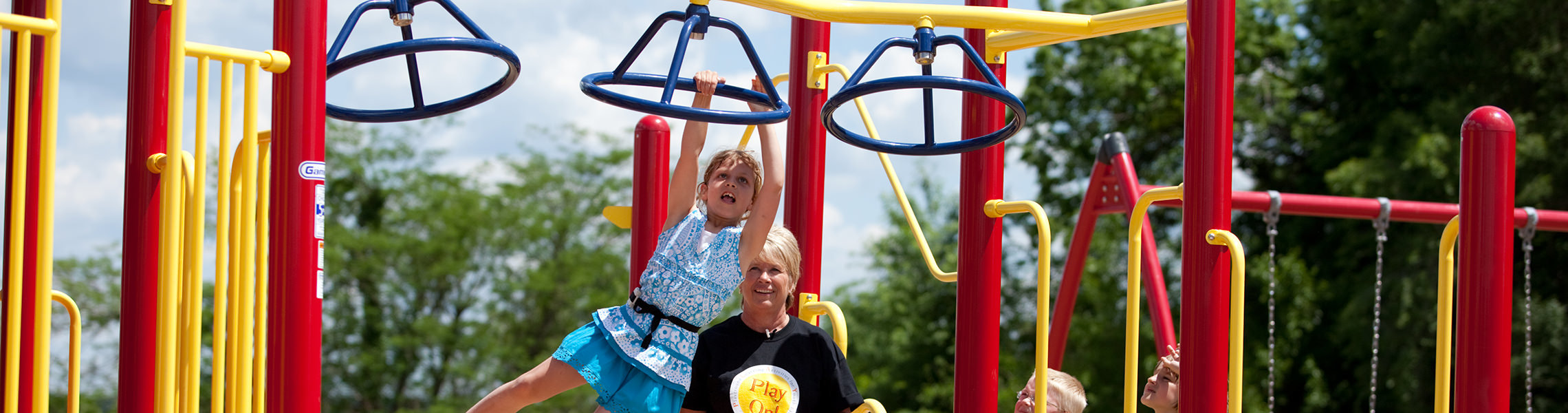
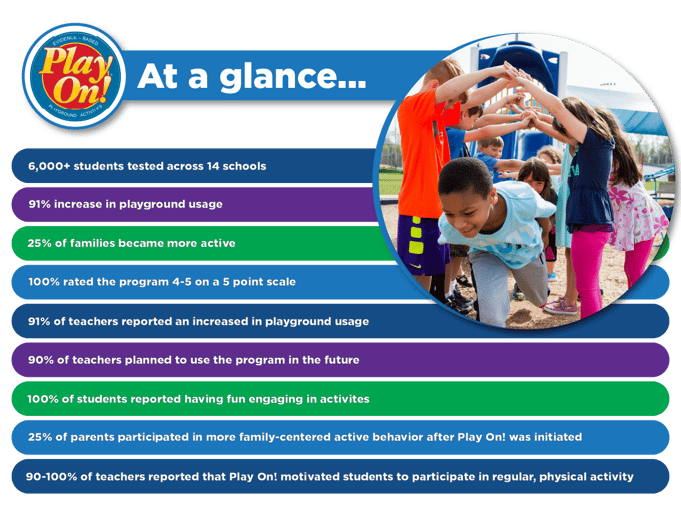
Schools love Play On! because it maximizes their playground investment, providing a setting for physical education in addition to recess. Since play is fun for children, they love engaging with the age-appropriate program activities, and since educators can enlist multiple areas within the playground, all children keep active throughout the session instead of the usual waiting for a turn that is associated with a lot of PE activities! In a research study at 14 pilot sites, approximately 6,000 children participated in a Play On! Beta study.
This comprehensive resource offers practical strategies to turn research into practice:
- The Six Key Elements: In-depth design tips for balancing, brachiating/upper body, climbing, sliding, spinning, and swinging.
- Age-Appropriate Considerations: Specific design guidance for younger children (ages 2-5) and older children (ages 5-12) to ensure safety and engagement.
- Site-Specific Amenities: Information on incorporating inclusive elements, naturalization, sport courts, and painted markings to maximize park usage.
- Projects of Excellence: Case studies showcasing real-world data where intentional design led to a 107% increase in unique visitors and significant potential healthcare savings.

Contributing Scholars

Marybeth Lima, PhD
Louisiana State University Chair; Department of Biology and Agricultural Engineering


Russell Carson, PhD
Consultant
Program Request
Fill out the form below to request your copy of Play On!® Playground Design Guide